

Breathing life back into coastal soils
Across the coastal stretches of Puri and Ganjam, near the Chilika basin, communities are facing a silent crisis. Large tracts of once-productive agricultural land have turned severely saline due to seawater intrusion. For local farmers, this has triggered a devastating cycle of crop failures, shrinking incomes, and distress migration.
Spanning an estimated 20,000 hectares, this is not just an isolated farming issue. It is a structural development challenge. Communities have been left without viable ways to regenerate their land or sustain their families. At Sachi Eco-Powered Livelihood Foundation (SELF), we realise that reversing this requires a nature-based, scalable solution. Enter the Vetiver Initiative.
- The miracle grass
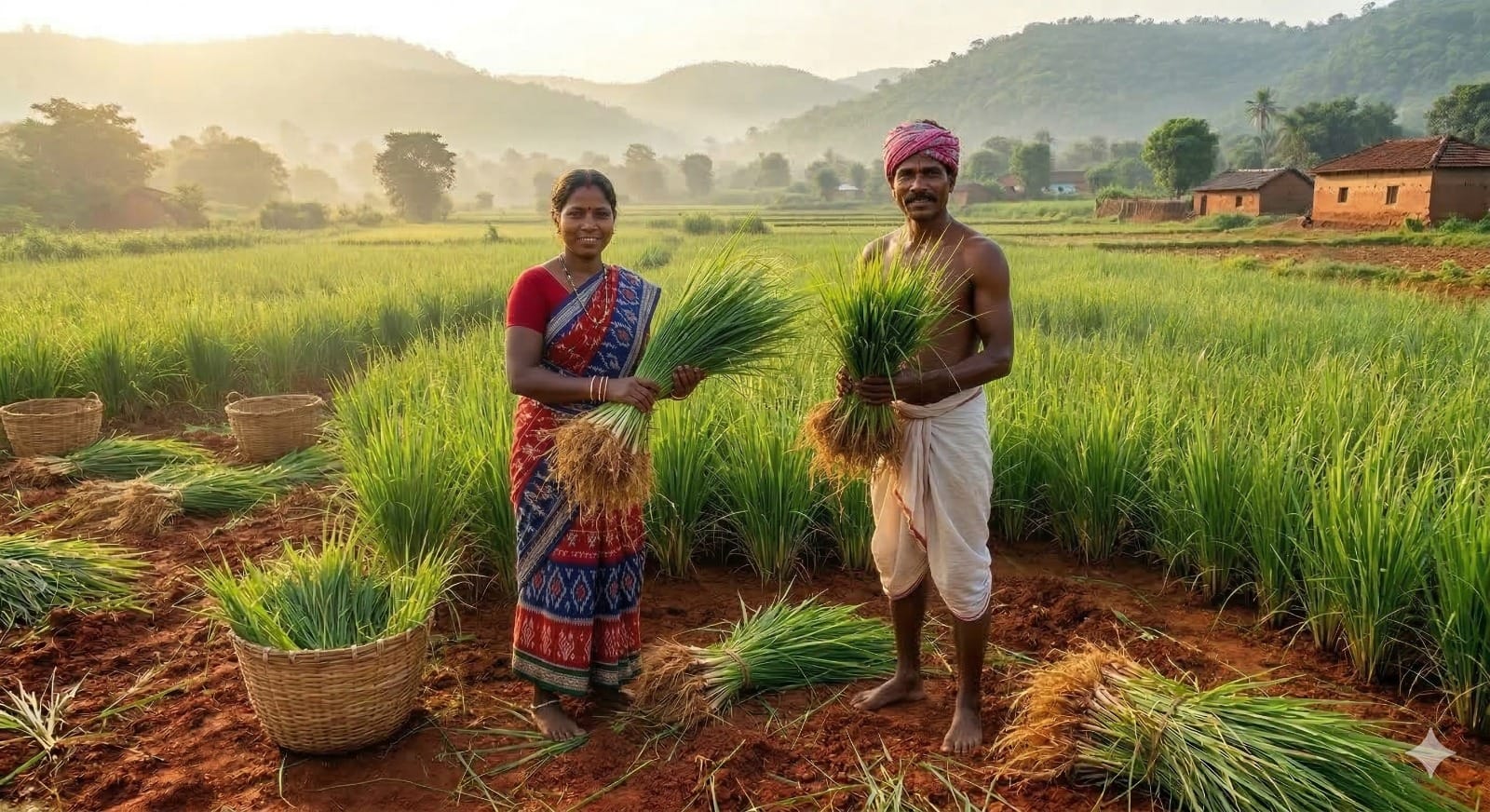
To transform these degraded landscapes into productive, climate-resilient green enterprises, we introduced Vetiver (Chrysopogon zizanioides). This remarkable, climate-resilient aromatic grass offers a powerful dualbenefit to both the earth and the local economy.
- Ecological armour
Vetiver grows a dense, vertical root system that reaches up to 3 to 4 meters deep. This underground network acts as a natural anchor, stabilising the soil, preventing coastal erosion, and remarkably, thriving in harsh saline and waterlogged conditions.
- Economic engine
The roots of the vetiver plant produce a highly valued essential oil. Prized by the global fragrance and cosmetics industries, this oil creates a lucrative, sustainable new livelihood for resource-constrained farmers.
Our roadmap to scale
We are implementing a structured, three-stage development pathway to ensure long-term,landscape-level impact.

Pilot (Completed)
We have successfully validated the agronomic suitability and economic potential of vetiver in saline coastal wastelands.

Incubation (Current)
We are establishing demonstration plots, training farmers in sustainable land management, and developing the early-stage value chain for essential oil extraction.

Scale-Up (Future)
With the support of donors and development partners, we aim to expand cultivation across thousands of hectares, empowering vulnerable communities and restoring fragile ecosystems.
A holistic vision
While vetiver has proven to be an incredibly powerful entry point, the overall Mission Wasteland is ultimately crop-agnostic. SELF is actively exploring additional climate-resilient crops and integrated land-use strategies. Our ultimate goal is the holistic regeneration of coastal lands to build healthier soils, resilient communities, and sustainable rural economies.

Partner with us
We invite donors, research institutions, and development partners to collaborate with us. Together, we can turn degraded wastelands into engines of resilience and prosperity.